“Carcinoma”: What’s in a name? - Gayle Sulik PhD, July 31st, 2013 
As part of a National Cancer Institute working group, Dr. Laura J. Esserman MD, MBA of Mt Zion Carol Franc Buck Breast Cancer Center along with colleagues Ian Thompson MD of the University of Texas Health Science Center at San Antonio and Brian Reid MD, PhD of Fred Hutchinson Cancer Research Center in Seattle, Washington, . . . → Read More: “Carcinoma”: What’s in a name?
The Unintended Consequences of Pink: Reorienting the Cause - Kathryn Evans, July 30th, 2013 
In April, Purdue University in West Lafayette, Indiana hosted a screening of the documentary Pink Ribbons, Inc. followed by a panel discussion a week later about how the culture of breast cancer impacts individuals and society. The event, organized by the Cancer, Culture, and Community program, was truly an effort to move beyond awareness! Colleagues . . . → Read More: The Unintended Consequences of Pink: Reorienting the Cause
Definition of Cancer Should Be Tightened, Scientists Say - Posted By BCC Admin, July 29th, 2013 
“Definition of Cancer Should Be Tightened, Scientists Say.” By Tara Parker-Pope, The New York Times.
A group of experts advising the nation’s premier cancer research institution has recommended sweeping changes in the approach to cancer detection and treatment, including changes in the very definition of cancer and eliminating the word entirely from some common diagnoses.
. . . → Read More: Definition of Cancer Should Be Tightened, Scientists Say
A poem from the book Overpass - Steve Davenport PhD, July 20th, 2013 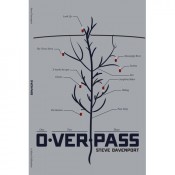
Good Housekeeping
Somewhere a shelf of labeled containers containing formalin and bits of flesh. Somewhere a book waterlogs in a tub while three-personed cells batter a body. Aggressive. Invasive. Metastatic. Somewhere a container labeled right breast
flanked by four others. Lymph node, sentinel one. Sentinel two. Axillary tail. Breast skin. Somewhere Overpass Girl bruises, blows, . . . → Read More: A poem from the book Overpass
Book Review: Am I My Genes? Confronting Fate and Family Secrets in the Age of Genetic Testing - Gayle Sulik PhD, July 18th, 2013 
Robert Klitzman’s “Am I My Genes?” explores a key question facing individuals in a genetic age: How does my genetic profile shape who I am and, in turn, what I believe? In-depth interviews with 64 people who have, or are at risk for, three diseases with identified genetic components (i.e., Huntington’s disease, breast and . . . → Read More: Book Review: Am I My Genes? Confronting Fate and Family Secrets in the Age of Genetic Testing
A Life-or-Death Situation - Posted By BCC Admin, July 17th, 2013
“A Life-or-Death Situation.” By Robin Marantz Henig, The New York Times.
As a bioethicist, Peggy Battin fought for the right of people to end their own lives. After her husband’s cycling accident, her field of study turned unbearably personal.
Brooke was cycling down a hill in City Creek Canyon in Salt Lake City when . . . → Read More: A Life-or-Death Situation
Thank you GABRAF for supporting BCC’s Beyond Awareness Campaign! - Posted By BCC Admin, July 16th, 2013 The Geography, Archaeology, Biology Research Activities Forum (GABRAF) is a local conference held at the University of North Texas for students and faculty members to share their current research. Its purpose is to provide a venue for preparing public outreach talks, scholarly research presentations, and scholarly publications. The audience of GABRAF is broad spanning physical, . . . → Read More: Thank you GABRAF for supporting BCC’s Beyond Awareness Campaign!
Why We’re Losing the War on Cancer-and How to Win It - Posted By BCC Admin, July 16th, 2013 
“Why We’re Losing the War on Cancer-and How to Win It.” The Leonard Lopate Show, WNYC.
Journalist and cancer survivor Clifton Leaf looks at why we have made such limited progress fighting the disease. In The Truth in Small Doses: Why We’re Losing the War on Cancer-and How to Win It describes why the public’s . . . → Read More: Why We’re Losing the War on Cancer-and How to Win It
How to Evaluate Online Health Information - Posted By BCC Admin, July 16th, 2013
A national survey from the PEW Research Center’s Internet & American Life Project (released Jan. 2013) reported that one in three American adults surveyed had gone online to try to figure out what kind of medical condition they or someone else might have. Of these “online diagnosers,” 46 percent sought professional attention about the condition . . . → Read More: How to Evaluate Online Health Information
Wouldn’t It Have Been Better Not To Get Cancer In The First Place? - Posted By BCC Admin, July 15th, 2013
“Wouldn’t It Have Been Better Not To Get Cancer In The First Place?” By Dr. Susan Love, Dr. Susan Love Research Foundation.
Dr. Susan Love was diagnosed with leukemia on June 8th, 2012.
I have given a lot of thought to the collateral damage that results from cancer treatment. The fact is, it is rarely . . . → Read More: Wouldn’t It Have Been Better Not To Get Cancer In The First Place?
|
|