Have breast cancer campaigns been beneficial? - Posted By BCC Admin, November 2nd, 2012 
“Have breast cancer campaigns been beneficial?” by Al Jazeera, Washington, DC
The pink ribbon has become a globally recognised symbol of the fight against breast cancer. And once again, October was deemed a month of awareness for a disease that claims the lives of tens of thousands of women worldwide each year. There is little . . . → Read More: Have breast cancer campaigns been beneficial?
Patients’ Expectations of Screening and Preventive Treatments - Posted By BCC Admin, November 1st, 2012
“Patients’ Expectations of Screening and Preventive Treatments.” By Ben Hudson, Abby Zarifeh, Lorraine Young, J. Elisabeth Wells, Annals of Family Medicine
An informed decision to accept a health care intervention requires an understanding of its likely benefit. This study assessed participants’ estimates of the benefit, as well as minimum acceptable benefit, of screening for breast . . . → Read More: Patients’ Expectations of Screening and Preventive Treatments
Research Brief — “The Right Trials” - Posted By BCC Admin, November 1st, 2012 
Dr. Patricia Steeg
Patricia S. Steeg, chief of the Center for Cancer Research at the National Cancer Institute, argues in Nature [2012, 485, S58a] that most people with breast cancer die as a result of metastases (spread). Clinical trials, however, are only designed to evaluate a drug’s ability to shrink established tumors rather . . . → Read More: Research Brief — “The Right Trials”
Cancer Screening Campaigns — Getting Past Uninformative Persuasion - Posted By BCC Admin, November 1st, 2012
“Cancer Screening Campaigns — Getting Past Uninformative Persuasion.” By Steven Woloshin, M.D., Lisa M. Schwartz, M.D., William C. Black, M.D., and Barnett S. Kramer, M.D., M.P.H., New England Journal of Medicine
For nearly a century, public health organizations, professional associations, patient advocacy groups, academics, and clinicians largely viewed cancer screening as a simple, safe way . . . → Read More: Cancer Screening Campaigns — Getting Past Uninformative Persuasion
Bringing on the pink - Gayle Sulik PhD, October 31st, 2012 
Published in the Philadelphia Inquirer
Komen Race for the Cure participants pitched pink tents and wacky signs in the Pennsylvania Convention Center this month. APRIL SAUL / Staff Photographer
Every October, as surely as the leaves turn, Susan G. Komen for the Cure’s pink-ribbon celebration marks Breast Cancer Awareness Month. But when a . . . → Read More: Bringing on the pink
The Breast Cancer Donor’s Dilemma: Time to Revolt? - Posted By BCC Admin, October 31st, 2012
“The Breast Cancer Donor’s Dilemma: Time to Revolt?” By Ellen Leopold, Truthout
Sixty years ago, the largest national health charities in the United States dominated the philanthropic playing field and were able to carve up the fundraising calendar year among themselves. Competing for their charitable dollars were what came to be called community chests. These . . . → Read More: The Breast Cancer Donor’s Dilemma: Time to Revolt?
Sexy breast cancer campaigns anger many patients - Posted By BCC Admin, October 31st, 2012
“Sexy breast cancer campaigns anger many patients.” By Liz Szabo, USA Today
Many breast cancer survivors say a crop of pink-ribbon campaigns have hit a new low — by sexualizing breast cancer. An online porn site this month has been using breast cancer to increase its Web traffic by offering to donate 1 cent for . . . → Read More: Sexy breast cancer campaigns anger many patients
We really need to talk about breast cancer - Posted By BCC Admin, October 30th, 2012
“We really need to talk about breast cancer.” By Sian Claire Owen, iVillage UK
When someone says the words ‘breast cancer’ to you, what do you think of? Is it pink ribbons and fun runs? Do you think that we’re talking about a disease that, thanks to research and early diagnosis, is on the verge . . . → Read More: We really need to talk about breast cancer
Disaster Drill - Jody Schoger, October 29th, 2012 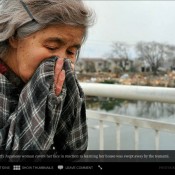
Photo Credit: Los Angeles Times
None of us can “prepare” ourselves for a disaster on the scale of the Japanese earthquake and tsunami of March 11th, 2011 and the subsequent nuclear reactor failure. This would equate to imagining your current life – the streets where you walk, the neighborhoods where you . . . → Read More: Disaster Drill
Breast cancer screening causes more damage than previously thought - Posted By BCC Admin, October 29th, 2012
“Breast cancer screening causes more damage than previously thought.” By Sarah Bosely, The Guardian (U.K.)
Breast cancer screening causes more harm than has previously been recognised, even though it saves lives, according to an independent review set up following years of scientific controversy surrounding the NHS programme. Around 1,300 lives are saved every year by . . . → Read More: Breast cancer screening causes more damage than previously thought
|
|